TUNNEL LIGHTS

The thoughts, reflections, rants, raves, on my life; The life of a Christian, black, gay, male.

Showing posts with label books. Show all posts

IMG_20140715_190528It was an over all ok read; i would love to see an updated edition, "Fear revisited" or something of that nature with updated statistics and new information. In the book they reference soldiers as having GWS (Gulf War Syndrome) which is now umbrellaed along with the term "post traumatic stress syndrome." Little things like that would make a, "2nd edition" an even more enthralling read for today's somewhat aware generation. Its a very good read for those who have some suspicions that the things that are being told are not true, its confirmation for the rest of us that know the things that are being said to us, or about us in my case and chapter, are not true. An excellent book for anyone interested in Journalism, Sociology, Psychology, Skepticism, Politics, Critical thinking or theory. If you study any one of those subjects, read this book because you very well may reference, "Fear" in the future. 

The down side is also the good side. This book has a copious amount of data, names of institutions, names of studies, articles in journals and research papers, as well as official titles politicians and scientist so much so that you can practice your speed reading and skip every third word. It is akin to that huge amounts of various greens surrounding a solitary salad shrimp you are given when you by a prepackaged shrimp salad. Over all a very good read, very good book. You can skip some stuff, even a chapter maybe.


527433Fantastic, a beautiful tragedy


This is more than a story or about a man coming out, or even coming to terms with life. This is a story about a man learning what it means to love, what it means to learn that you have been in love, real and true love, only to discover that it is too late and looses that love. You could label the characters gay, straight, bisexual but then you would be missing the point. This story is about learning one's self and learning love and fluidity of life itself. This is and excellent book, I only wish i would have had the courage to read this when I was much younger. This tragic beauty is a gem of literature and i would have much rather had spend my school days writing essays and having group discussion picking about this fine work instead of 19th century melodramas that all tell the same story except with different titles and different characters. This easily goes into my top 10 favorite books and read again pile.


themythofsisyphusThe Good

I started this book before last semester thinking, because of its size, that i would be able to fit it in between the readings and workings of my other classes but that was not the case. What I first want to say about this book is what a fantastic read. Mr Camus gives his readers some meditative gems that they will digest for many of hours and days, if not months and years. What exactly is the absurd? That question is what keeps readers going and the reader may assume that the "absurd" is life and living itself but then Camus might render such and answer too simplistic in its logic and reasoning and the answer of an "absurd" man. I believe that many should read this book, more than once or twice. Those that do most likely will take very different things from this excellent philosophical journey.


The Bad

Like many other philosophers, Camus falls into the trap of building, establishing, and or laying the foundations of his work by tearing down, attempting to disprove, or flat out saying that works of his contemporaries or progenitors is flawed or wrong. He does this extensively with a few names but none more than Nietzsche. Having read this book. one would be valid in labeling Camus the, "Anti-Nietzsche." Also, like many other philosophers, his examinations of points counter to his are only included to prove his underlying point(s) or to show their own absurdity, in the traditional meaning of the word. After a while,Camus' tone begins to drape itself in the cloak of a highly insightful and knowledgeable but ultimately incredulous critic. For me, it begins to take away from his own original work, which i was highly impressed. I would have liked to read more of his own thoughts, theories, and ideas without them being rooted and derived from a place of showing how different from or counter to something else or someone else. 


 the condemnation of blacknessThe Condemnation of Blackness: Race, Crime, and the Making of Modern Urban America Paperback
by Khalil Gibran Muhammad

http://www.amazon.com/The-Condemnation-Blackness-Making-America/dp/0674062116

If you are interested in how the systematic racial structures became established in the East and West then this book is a must have. The historical documentation that i found in this book might have taken a life time of searching in the realm of obscurity to find on my own. This book is an instant classic and has earned its place along side the classics of African American Studies like the Mis-Education of the Negro and The wrenched of the earth.

There are times, from a reader's stand point that you feel as if you are reading an data analysis report instead of a work of literature, and saying that I had to put it down last semester to finish some required reading for school. The sometimes dry style of this book can be over looked because of the data that is presented. The condemnation of Blackness is a treasure trove of information that i have not seen in one place ever nor seen analysed. This book places its finger on the old notion of, "I wont discriminate against you just dont try to date my daughter/son, move into my neighborhood, or take my job" These things are never really spoke of with in the "racism" talk. The one where saying "the N-word" or having a "whites only" signs is the only discussion allowed. Lack of education and opportunity and the notion of inherit criminality is what they book begins with and is outstanding in its presentation and examination.

This book is a must have and must read.


103322762

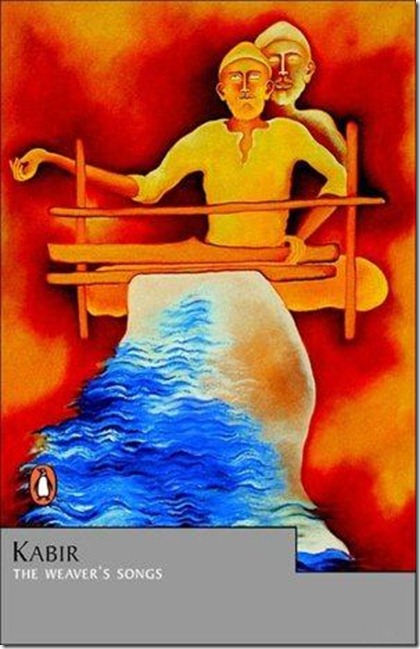
I knew I had to purchase this book when I saw it sitting on two shelves at my former Borders bookstore. The first shelf was in religion: right after the books on Rumi and wedged in between the end of the Qu’rans perched a shelf above various versions of The Bhagavad Gita and The Upanishads. In reflection, I see how a more proper placement could not have been found except for its other home in the poetry section. However now I would argue against its flippant placement on the various poetry shelf. I am a bit backlogged in my reading so it to me a while to get to this, but the wonders that awaited me when I opened this clandestine masterpiece and unfurled its pages I was awe-inspired to say the least.

From the extensive introduction, we gather that the man that is accredited with these poems, songs, and sayings was alleged to have lived anywhere from 120 years to 700 years today; most scholars say he lived to about 50. He was a weaver by trade and found god in it and jubilantly sang it aloud as a bard traveling and selling his textiles. He is said to have not been able to read or write so all of his wisdom has been transmitted orally until recorded centuries ago. History has also accredited him with being one of the spiritual founding fathers of Sikhism but also one of the first recorded and documented poets of the Hindu language.

Storm

My good brothers,
Knowledge swept through
Like a hurricane.
            It completely blew away
The reed-curtain
            Of confusion and error
It didn’t let Māyā
            Stay tied down.

It toppled the twin poles
            Of vacillation,
It broke the beam
            Of everyday love.
It tossed down
            The thatch of craving
From the top of the roof,
            It shattered the pot
Of foolishness

The rain that fell
            In the wake of the storm
Soaked Your men to the skin
            Kabir says, when I saw
The sun come out
            My mind was filled with radiance

On the surface this song/poem is a plain as it is brilliant. Knowledge, being the thing that untied Māyā(illusion). Māyā (illusion) being the world around us that we have created within our minds and have imposed upon the natural world around us. Knowledge blowing away confusion and shattering the pot of foolishness exclaims of a master poet and hints at the mind of this great thinker. This great thinker was not from a high standing family or from one of the casts of great prestige, but was an everyday person like you and I with the equivalent of an everyday job and trade. Historically he was also one of many weavers of his time and in his city. His mother and father were not only weavers by trade but weaving was a family tradition and all the families that lived in area were weavers so again, what should have made him one of many made him stand out even further.

Ant

Beware of the world,
            Brothers,
            Be alert—
You’re being robbed
            While wide awake
Beware of the Vedas,
            Brothers
            Be vigilant—
Death will carry you away
While the guard
            Looks on.

The neem tree
Becomes the mango tree,
            The mango tree becomes
            The neem,
The banana plant
Spreads into a bush—
            The fruit on the coconut palm
Ripens into a berry
Right under your noses
            You dumb and foolish
            Rustics

Hair becomes sugar
            And scatters Himself
            In the sand
No elephant can sift
The crystals from the grains
            Kabir says, renounce
            All family, cast, and clan
Turn into an ant,
            Instead—
Pick the sugar from the sand
            And eat.

Ant is one of my favorites. Here Kabir warns us of the dangers (I believe) of not discerning doctrine and dogma and letting either play the major role in our relationship in with god instead of God. I also believe he is saying instead of seeking to inflate ourselves with titles, ranks, and importance, we should be humbling ourselves in our search for self, for god, and oneness. If we believe ourselves, or allow others to place us in a demi-god position we not only fall for the tricks of our own pride but also the tricks and manipulations of the ones that seek to hinder our journey and we miss out on the very thing we are seeking.

The simple State

Listen,
You saints—
I see that the world
Is crazy.

When I tell the truth,
People run
To beat me up—
When I tell lies,
They believe me.

Ive seen
The pious ones,
The rtual mongers—
They bathe at dawn.
They kill the true Self
And worship rocks—
They know nothing

Ive seen
Many masters and teachers
They read their Book,
Their Qur’an

They teach many students
Their business tricks—
That’s all they know.

They sit at home
In pretentious poses—
Their minds are full
Of vanity

They begin to worship
Brass and stone—
They’re so proud
Of their pilgrimages
They forget the real thing.

They wear caps and beads,
They paint their brows
With cosmetics
Of holiness

They forget the true words
And songs of witness
The moment they’ve sung them—
They haven’t heard
The news of Self.

The Hindu says
Rāma’s dear to him
The Muslim says its Rahīm.

They go to war and kill each other—
No one knows
The secret of things

They do their rounds
From door to door
Selling their magical formulas—
They’re vain
About their reputations

All the students
Will drown with their teachers—
At the last moment
They’ll repent

Kabir says,
Listen,
You saintly men,
Forget all this vanity

Ive said it so many times
But nobody listens—
You must merge into the simple state
Simply

This is another one of my favorites. Here, Kabir speaks again of being religious without any connection to the self and God. He speaks of how the religious Hindu and the religious Muslim have voided any connection with their god or gods and have turned religion into nothing more than business tool. This poem has a lot of historical context that still plays into tensions in the region today. Hindu’s preferring to do business exclusively with other Hindu’s and Muslim with Muslim along with a whole tome of other issues I won’t get into here as not to detract from Kabir. The majority of us in the 21’st century west have, or had no idea that for nearly 1000 years the Hindus and Muslims did not get along and the constant warring of the two religious groups led to the creation of a place that came to be called Pakistan. Kabir points out the people that only use religion as access to people inner sanctums of their heart and minds but not for the purpose of spiritual growth but a nefarious monetary gain.

In Ant he touches on what he perceives to be the fallacy of the phony Hindu and the dangers of strict and ritualistic adherence to the Vedas. In the simple state he points out what he believes to be contradictions with those claiming Islam and holding up the Qu’ran as law yet acting opposite. He calls for everyone to come to a simplistic and humble state where truth and knowledge are the gateways to self, oneness, and god.

The last part of the book is composed of various sayings attributed to Kabir  

#6
Kabir, a fire raging on every side
            Consumed the house built of wood:
Paṇḍit after paṇḍit perished in the blaze,
            While every idiot got away

I'm not fluent in Hindi or Sanskrit so I looked up the word Paṇḍit. Thankfully the this editions glossary is very handy. With new understanding of the word, (A paṇḍit (Hindi; Devanagari: पण्डित; Bengali: পন্ডিত, Sanskrit: paṇḍita) is a scholar, a teacher, particularly one skilled in Sanskrit language, mastered vedic scriptures in the four vedas, Hindu rituals and Hindu law, religion, music or philosophy under a Guru in a Gurukul or tutored under the vedic ancient Guru Shishya tradition of learning. The English loan word pundit is derived from it http://en.wikipedia.org/wiki/Pandit) how true is it that the world, as the house built of wood, were to be burning down the scholarly learned one would parish while those called simple, dumb, and idiots would be the ones to get away.

#32
The one who stays within the limits assigned to him is a man.
            The one whom roams beyond those limits is a saint.

To reject both limits and their absence:
            That’s a thought with immeasurable depths.

This is one of my favorites and needs no explanation

Kabir’s: The weaver’s song is a masterful contribution to the world of poetry, song, prose, and philosophy. The man sat at the spiritual intersection of Islam and Hinduism, at times rejected them both, and at others praised them both at a time with saying anything about either was certain death in the wrong company. Today being a moderate of anything in America is seen as some sort of ambivalence. Today one not only must shout for an extreme view left or right but it is also one’s duty to sway everyone they come in contact with to the side they reside on. It is tragic in my eyes because, as is shown in American politics, with no one willing to reside and see truth in the middle no one will take steps to meet there.

The only modern equivalent I can think of what today’s version of what Kabir would look like would be someone marrying evangelical Christianity with Kabbalah. If said person were around today, would said thought last for almost six centuries as it did with Kabir? Would said poetry and prose be quoted on the streets by the everyday man and woman as it was in his time? Would we even remember said mystic to first shed light on the new thought as Kabir shed light on the weaver’s song? Pick up this book and ask yourself the questions, read the words, and hear the centuries old songs sung in your mind and let the thought behind them sink into your soul and meditate.


37781As I read this book of few pages there were many different themes that ran through it: Tradition, Afrocentricity, and African village life pre and post colonialism. The one that is most personal and prevalent to me was the one that reigned from beginning to end, Manhood. Things fall apart written by Chinua Achebe opens with introducing us to Okonkwo. His ideas of manhood are born out of resentment of his father. I would go as far as to say that Okonkwo’s contempt of his father is the foundational bedrock upon which he shaped his entire worldview. The ideal of a man, manhood, and how a man conducts himself at home and in society all, in my opinion, was fashioned by doing and being the opposite man he believed his father to be.


Okonkwo’s father was a carefree musician that lived for fun and the feast. He was also a debtor, so much so that he owed most everyone in the village. His barn was small, he had only one wife, and no title or place of honor in the village. If the lacking of any status symbols were not enough for Okonkwo to view his father with shameful eyes, he died in such a way that he could not be permitted a respected death at home. He had to be taken to the outskirts of the village and left to die because his sickness was one that village tradition dictated was foul and an abomination against the earth goddess. He could not die in the village or the village would be cursed and he could not be buried in the earth because that would also be a curse.


A very young Okonkwo was the man of the house now. The only son of a man with no title, and after his father’s debts were paid, no barn and no yam seeds, had to find a way to care for his grieving mother and his father’s family. He swore that day, to never be what his father was and in doing so, he proved himself. At his very early age, even by the village standards, he provided. He proved himself to be a brave and fearless warrior by taking the heads of a few men in war. He also proved himself greatly in sport by defeating someone that the entire clan considered unbeatable. With age, he gained titles and places of honor. He took three wives and had a larger than average of compound and barn. He even held one of the highest honors as an Egwugwu. An Egwugwu is essentially a person that is possessed by an ancestral spirit that dons a mask and delivers justice or punishment.


This was all counter balanced by Okonkwo being just as stern on himself as he was with everyone, and was even considered too harsh sometimes by the other men of the village. Okonkwo did not show any emotions except anger because it was the only manly emotion. He did not speak often and was a man of very few words, because only women and children constantly talked and made noise, men took action. He never borrowed except the one time because a real man supported himself and his family on his own. As we also see, a man never openly shows affection to his wife or children, and if he does, it is done in a very manly way. A real man was a divine instrument of correction, punishment and however misguided, direction.


Just as it seems that Okonkwo’s manhood plan is working for him he is brought to poetic shame by an accident considered female in the tradition of the village. The proud and respected Okonkwo was now an outcast, by village law he and his family were forced to live in his mother’s village for seven years while all the men of the village burned his compound to the ground. He was stripped of his title and standing and in his eyes alone, was the equivalent to the boy he was so long ago.


Seven years pass and Okonkwo rebuilds. He planned to come back to the village and make himself into a greater man than what he was before his tragic womanly accident. His plan was set but the times had changed, missionaries, white men, had come bringing a new religion, and new laws to the land. At first, it only claimed the outcasts and the undesirables of the village and clans that no one wanted or liked anyway. His standing on the missionaries and white men were, at worse nothing more than a joke. At worse Okonkwo saw them as a young pest that needed to be squashed before it grew too large. After eventually calming a portion of land considered unholy, a few villagers considered normal, a few men of high title, and his oldest son, Okonkwo begins to break down.


The conflict further escalates when an unruly outcast turned Christian spitefully unmasks an egwugwu. This would essentially be the same as someone killing an archbishop. In Okonkwo’s eyes, this meant out right war, but the men of the village seemed too had lost their thirst for blood as in days of old. They all talked, compromised, and resorted to burning down the mission. This action causes Okonkwo and all the men of high title and status to essentially be held for ransom and beaten, falsely imprisoned, and unfairly tried under the queen’s law. Like a freshly chastised child, Okonkwo goes home angered beyond the point rage or anger could properly express and swears revenge, even if he is the only MAN left willing to do so. At home Okonkwo recalls the days of his youth with when talking to an enemy like some of the men now did would not have been given serious consideration. The womanly reasoning, as he saw it, would have been left to the women while the men took heads and drove out the missionaries.


The book closes in a grand meeting, which Okonkwo despises, talking about what to do, and if these actions meant war was the proper action. Okonkwo forces the hand and seeing, realizing, in his mind, that he is the only REAL MAN left amongst them he does what I believe he believed to be a final slight at all the cowards that called themselves men and an example to the village of what he believed the proper action that they all are eternally doing now.


Over all, this book was very boring; by the time it started to get interesting, it was over. I really had to force myself to finish. This I never thought I would come across a book that I found utterly dry, to be as interesting as it was. Okonkwo and his arrested development kept me wanting to see what happen next. If you are a quick reader I say, go ahead and read. The more you think about and contemplate the dynamics, themes, and character analysis of the book, that becomes tremendously more interesting that the actual meat of the book itself. If you have a short attention span or need something with action or a twist and turn to keep you going, do not ready this book.         


160149

I think I'm going to have to give up on this book. I really dislike saying such things but I am very underwhelmed by The Call of Cthulhu and other weird stories by H.P. Lovecraft. It could be due to desensitization or the amount of hype and praise that various friends gave H.P. Lovecraft. I am a proud child of the 70’s and 80’s so some of the first media I was ever exposed to was the slasher horror flick. Jason, Michael Myers (Halloween 3 sucked so much I begged my mother to let me watch it and was so mad because it was nothing like 1 or 2, and was really poorly written and made no sense) Freddy Kurger, Chucky, Damien, and Regan Burstyn were all the odd protagonist of my day. Some of my favorite television in my childhood was the twilight zone, the outer limits, tales from the darkside, tales from the crypt, monsters, and one of the ones that really love was Friday the 13th the series.

When I allotted time to be properly horrified by the man countless critics called, the father and master of American horror I was very disappointed. His writing style is beautiful he is one of the few writers that transform the written word into experience. There is a point that you do not notice where you stop reading and you are merely following the events of the unfolding epic. The unfortunate part is the epic that unfolds is the archetype of anticlimactic. I wanted to like these stories, and they were good, but from what I had heard, I expected a great deal more.

Dagon: seemed to be nothing more than a spooky dream that had not reached full nightmare status at worse, an initial outline for The Call of Cthulhu at best

The Statement of Randolph Carter: Was an attempt at suspense but the constant reminder of the horrors that we can not see, and would drive a weaker man insane only made the second hand recount of the terrors more interesting and I was hoping at one point he would jump down the well and just help his friend. To me as the reader I thought that was the logical next step but it wasn’t and the ending, Ill be honest, was campy.

Facts Concerning the Late Arthur Jermyn and His Family: This was just silly and a tad bit racists. He protagonist sets himself on fire because he finds out that he is probably the last descendent of a race of white gorillas that happen to breed with people.

Celphais: Is really a story about a guy that had a good acid dream and spends the rest of his life trying to get back to it and dies when he does.

Nyarlathotep: I believe this was probably what inspired the first two mummy movies. If you have seen them then you have the jist of this short here.

And the great

The Call of Cthulhu: This was such a disappointment. Cthulhu is an ageless squid, octopus dragon god with wings that has been dormant but conscience for ages beyond count or measure. It gives artists and poets nightmares and causes its worshipers to go frantic with frenzy. Anyone that speaks of Cthulhu to anyone that does not know of Cthulhu, dies. One day a sailor stumbles upon Dagon’s island… I mean Cthulhu’s island and sees Dagon’s monolith… I mean Cthulhu’s monolith and the rest of ancient city that housed the old one. “and what an age-old cult had failed to do by design, a band of innocent sailors had done by accident. After vigintillions of years great Cthulhu was loose again, and ravening for delight." I mean that line alone just one of the things that angers me. I mean if you have been around trillions of years before the first organisms on earth began to form and shaped the very thoughts of early man in ape form, you could not get one of your worshipers to come jail break you? And how weak are you that a boat can ram you and cause your head to explode. COME ON

I read a few other stories but I wont review them because I don’t like to continue in negative. If you like Horror and are a great fan of Poe, stay away from H.P. Lovecraft, save for style and technique alone. The contents of these stories, however beautifully written, are for me a classic case of the dangers of hype.


Blog Widget by LinkWithin

About this blog

I offer my own unique voice, my own vision. I think the saying goes that writers write because no one else can say what they have to say quite the way they have to say it. That is why I write, that is what I offer.

Followers

Labels

My twitter